
Understanding Color Psychology
Color psychology explores how colors influence human perceptions, emotions, and behaviors. It examines cultural associations, physiological responses, and psychological effects of different hues. We’ll explore its historical roots, key principles, and common color meanings.
Historical Overview
Color psychology has ancient origins in healing practices and cultural symbolism. Early civilizations used colors in rituals and medicine. Ancient Egyptians and Chinese practitioners believed colors could affect health and wellbeing.
In the 20th century, psychologists and marketers began studying color’s impact on mood and behavior. Johann Wolfgang von Goethe’s “Theory of Colors” in 1810 laid groundwork for modern color psychology. Swiss psychiatrist Carl Jung explored color symbolism in the 1900s.
Today, color psychology informs fields like marketing, design, and therapy. Researchers continue uncovering how colors shape our perceptions and choices.
Basic Principles
Color psychology rests on several core ideas:
- Colors evoke emotional and physiological responses
- Cultural context influences color associations
- Personal experiences shape individual color preferences
- Color combinations can amplify or alter effects
Warm colors (red, orange, yellow) tend to energize, while cool hues (blue, green, purple) often calm. Brighter colors typically stimulate, and muted tones soothe.
Color saturation and value also play key roles. Highly saturated colors appear more intense. Lighter values feel airy, while darker shades convey weight or luxury.
Color Associations and Meanings
Common color associations in Western cultures include:
| Color | Common Associations |
|---|---|
| Red | Passion, energy, danger |
| Blue | Trust, calm, stability |
| Green | Nature, growth, health |
| Yellow | Happiness, optimism, caution |
| Purple | Royalty, luxury, creativity |
| White | Purity, cleanliness, neutrality |
| Black | Power, elegance, mystery |
These meanings can vary across cultures. In China, red symbolizes luck and prosperity. In some African cultures, white represents mourning.
Personal experiences also shape individual associations. Someone who had a blue childhood bedroom may find blue especially comforting.
Color Symbolism in Different Cultures
Colors carry profound meanings that vary widely across cultures. These symbolic associations influence art, fashion, marketing, and social customs around the world.
Western Cultures
In Western societies, red often symbolizes passion, love, and danger. We see this in Valentine’s Day decorations and warning signs. Blue represents trust and stability, which is why many banks and corporations use it in their logos. Green is associated with nature, growth, and money.
White signifies purity and innocence, as seen in wedding dresses. Black can represent elegance or mourning, depending on the context. Purple traditionally symbolizes royalty and luxury due to the historical rarity of purple dye.
Yellow often evokes cheerfulness and optimism in Western cultures. It’s frequently used for caution signs and school buses to grab attention. Orange combines the energy of red with the cheerfulness of yellow, representing enthusiasm and creativity.
Eastern Cultures
In many East Asian cultures, red symbolizes good fortune and joy. It’s a popular color for celebrations, especially during Chinese New Year. White, in contrast to Western symbolism, is often associated with mourning and funerals in countries like China and Korea.
Yellow holds special significance in Asian cultures. In China, it was historically reserved for emperors and represents power and prosperity. In Japan, yellow can symbolize courage.
Blue is generally viewed positively in Eastern cultures, representing healing and relaxation in many countries. Green is associated with nature and new beginnings in Japan, while in China it can symbolize infidelity.
In Hinduism, each color has specific meanings. For example, saffron represents purity and fire, while blue is associated with Lord Krishna and divine energy.
Middle Eastern Cultures
In Islamic cultures, green holds special significance as it’s believed to have been Prophet Muhammad’s favorite color. It represents paradise and is widely used in flags and religious symbols across the Middle East.
Blue is often associated with protection in many Middle Eastern countries. This belief is reflected in the blue eye amulets commonly found in Turkey and surrounding regions.
White symbolizes purity and peace in most Middle Eastern cultures. It’s often worn during religious ceremonies and pilgrimages. Black, while sometimes associated with mourning, can also represent rebirth and strength.
Gold is highly valued in Middle Eastern cultures, symbolizing wealth, luxury, and divine light. It’s frequently used in architecture and artwork.
African Cultures
African color symbolism is incredibly diverse, varying greatly between regions and tribes. Red often represents life and health in many African cultures. It’s used in ceremonies and traditional medicines.
White is commonly associated with purity, peace, and ancestral spirits across much of Africa. In some cultures, it’s worn during important rites of passage.
Green symbolizes growth and fertility in many African societies. It’s often connected to agriculture and the natural world. Blue can represent love, harmony, and peace, especially in North African countries.
Gold holds significant value in many African cultures, symbolizing high status and wealth. It’s frequently used in traditional jewelry and ceremonial objects.
Black has varied meanings across African cultures. While it can represent maturity and masculinity in some societies, others associate it with spiritual energy or the unknown.
Indigenous Cultures
Native American cultures often attach deep spiritual meanings to colors. Red frequently symbolizes earth, healing, and strength. It’s used in face paint and ceremonial objects.
White represents peace and spirituality in many indigenous North American cultures. It’s often associated with the cardinal direction north and the element of air.
Yellow can symbolize intellect and courage in some Native American traditions. Green is commonly associated with nature, growth, and harmony with the earth.
In Australian Aboriginal art, colors carry specific meanings. Red often represents the earth and sacred ceremonies. Yellow symbolizes the sun, while white can represent the sky and time.
Many indigenous cultures in South America use vibrant colors in their traditional textiles and art. These colors often represent elements of nature, spiritual beliefs, and cultural identity.
Colors in Cultural Celebrations and Rituals
Colors play a vital role in cultural celebrations and rituals worldwide, carrying deep symbolic meanings. We explore how different hues are incorporated into significant life events and festivities across various societies.
Weddings
White dominates Western wedding attire, symbolizing purity and new beginnings. In contrast, Chinese brides often wear red for good fortune and prosperity. Indian weddings burst with vibrant colors, each holding special significance.
Red represents passion and love. Gold symbolizes wealth and prosperity. Green signifies new beginnings and fertility. Brides may wear saris in deep reds, rich purples, or vivid oranges.
In some African cultures, couples incorporate colorful kente cloth into their wedding attire. The intricate patterns and hues represent their heritage and hopes for the future.
Birth and Death
The colors associated with birth and death vary widely across cultures. In many Western countries, blue represents baby boys while pink signifies girls. However, this is a relatively recent tradition.
In China, red envelopes containing money are given to newborns for good luck. The color red is believed to ward off evil spirits and bring prosperity to the child.
For funerals, black is common in Western cultures as a sign of mourning. White is the traditional color of mourning in many Asian countries, symbolizing purity and rebirth. In some African cultures, red and black clothing expresses grief.
Religious Festivities
Colors hold deep religious significance in many faiths. During Christmas, red and green dominate in Christian cultures. Red symbolizes the blood of Christ, while green represents eternal life.
In Hindu celebrations, vibrant colors abound. During Holi, revelers throw colored powders, creating a joyful rainbow. Each hue carries meaning – red for love, blue for Krishna, yellow for knowledge.
Islamic festivals often feature green, a color associated with paradise in the Quran. During Ramadan, mosques are adorned with green lights and decorations.
Harvest and Seasonal Festivals
Autumn harvest festivals frequently incorporate warm hues like orange, red, and brown. These colors reflect the changing leaves and bountiful crops. In the United States, Thanksgiving decorations feature these earthy tones.
Spring festivals celebrate renewal with fresh, vibrant colors. Japan’s Cherry Blossom Festival bathes cities in soft pink hues. India’s Vasant Panchami honors the arrival of spring with bright yellow attire and decorations.
In Chinese culture, the Lantern Festival marks the end of New Year celebrations. Red lanterns illuminate streets and homes, symbolizing good fortune for the coming year.
Psychological Effects of Color in Marketing
Color choices in marketing profoundly impact consumer perceptions and behaviors. We’ll explore how colors shape brand identities, influence product packaging design, and enhance advertising campaigns.
Brand Identity and Logos
Colors play a crucial role in establishing brand identity and recognition. Red, used by brands like Coca-Cola and Netflix, evokes excitement and passion. It can stimulate appetite, making it popular in the food industry. Blue, favored by Facebook and IBM, conveys trust and reliability. It’s often used by tech and financial companies.
Yellow, seen in brands like McDonald’s and Ikea, promotes cheerfulness and optimism. It grabs attention quickly, making it effective for signage and displays. Green, used by Starbucks and Whole Foods, represents nature and health. It’s popular among eco-friendly and wellness brands.
Purple, as seen in Cadbury and Hallmark, suggests luxury and creativity. It’s less common, allowing brands to stand out. Black, used by Nike and Apple, conveys sophistication and power. It’s popular in luxury and tech markets.
Product Packaging
Color choices in packaging significantly influence purchasing decisions. We’ve found that up to 90% of snap judgments about products are based on color alone.
Blue packaging often denotes reliability and cleanliness, making it popular for cleaning products and personal care items. Red packaging grabs attention on shelves and can increase perceived product value. It’s frequently used for impulse purchases and sales items.
Green packaging suggests eco-friendliness and health, making it popular for organic foods and natural products. White packaging conveys purity and simplicity, often used for minimalist or premium product lines.
Black packaging implies luxury and sophistication, common in high-end cosmetics and electronics. Yellow and orange packaging stands out on shelves and can create a sense of affordability, often used for budget-friendly brands.
Advertising Campaigns
Color plays a vital role in creating effective advertising campaigns. We use warm colors like red and orange to create urgency and prompt immediate action. These are effective for limited-time offers and sales promotions.
Cool colors like blue and green are used to promote relaxation and trust. They’re often employed in healthcare and financial service ads. Purple in advertising suggests creativity and innovation, making it popular for beauty and tech products.
Yellow captures attention quickly, making it useful for headlines and call-to-action buttons in digital ads. White space in ads creates a sense of simplicity and helps direct focus to key elements.
Color combinations also matter. Contrasting colors can make important information stand out, while complementary colors create a harmonious feel. We carefully consider cultural color associations when designing global campaigns to avoid unintended messages.
Interpreting Colors in Political and Social Contexts
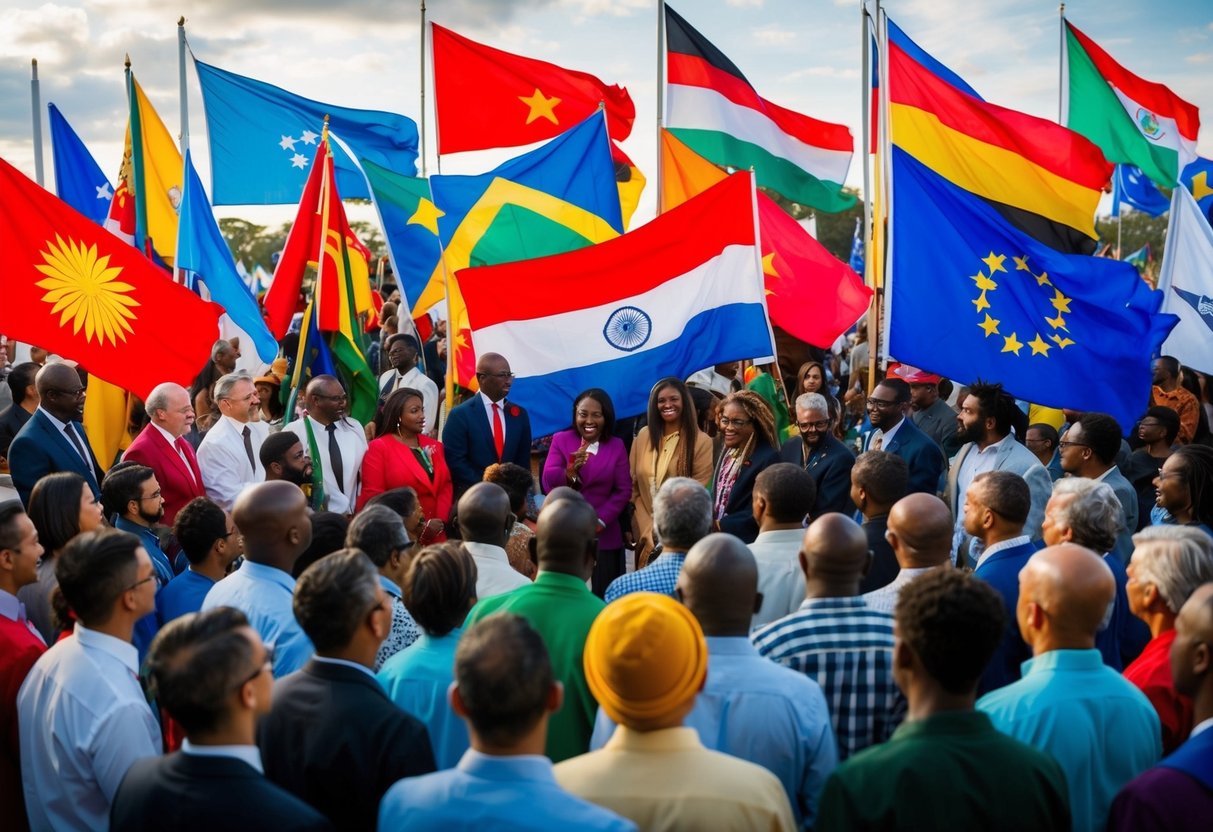
Colors play a crucial role in shaping political identities, social movements, and national symbols worldwide. Their meanings can vary dramatically across cultures and contexts.
National Symbols
Red, white, and blue dominate many national flags, but their significance differs. In the U.S. flag, red represents valor, white signifies purity, and blue stands for justice. France’s tricolor carries revolutionary ideals – liberty (blue), equality (white), and fraternity (red).
The green in many Islamic nations’ flags symbolizes paradise or the prophet Muhammad. India’s flag features saffron for courage, white for truth, and green for prosperity. The red star on Vietnam’s flag represents the five main classes in Vietnamese society.
Some countries use distinctive colors. Japan’s rising sun flag showcases red on white, embodying the nation’s name as the “Land of the Rising Sun.”
Political Movements
Political parties often adopt specific colors to differentiate themselves. In the U.S., red typically represents Republicans, while blue signifies Democrats. This “red state/blue state” division is now deeply ingrained in American political discourse.
In the UK, red is associated with the Labour Party, blue with Conservatives, and yellow with Liberal Democrats. Green parties worldwide use their namesake color to emphasize environmental priorities.
Orange gained prominence in Ukraine’s 2004 revolution against election fraud. Purple, a mix of red and blue, sometimes symbolizes bipartisanship or centrist positions in American politics.
Activism and Awareness Campaigns
Color-coded ribbons have become powerful symbols for various causes. Pink ribbons represent breast cancer awareness, while red ribbons symbolize HIV/AIDS awareness. Yellow ribbons often show support for troops or prisoners.
The rainbow flag, with its vibrant spectrum, has become the universal symbol of LGBTQ+ pride and rights. Each color in the flag carries its own meaning, from life (red) to spirit (purple).
Black has long been associated with anarchism and anti-fascist movements. The “Black Lives Matter” movement has utilized this color prominently in its imagery and messaging.
Green is frequently used in environmental activism, appearing in logos for organizations like Greenpeace. It represents nature, growth, and sustainability in these contexts.
Impact of Color on Behavior and Decision Making
Colors exert a powerful influence on human behavior and decision-making processes across various domains. We’ll explore how color choices affect consumer purchasing, workplace productivity, and learning environments.
Consumer Choices
Color plays a crucial role in marketing and product design. Red often stimulates appetite and impulse buying, making it popular for fast food logos. Blue conveys trust and reliability, frequently used by banks and technology companies. Yellow grabs attention and creates a sense of optimism, which is why it’s common in store windows and sale signs.
In packaging, colors can influence perceived taste and quality. Green packaging may lead consumers to view a product as healthier or more natural. Black packaging often signals luxury and sophistication, potentially justifying higher prices in consumers’ minds.
A/B testing in e-commerce reveals that changing button colors can significantly impact conversion rates. Orange and red buttons frequently outperform other colors for calls-to-action.
Workplace Design
Color choices in office environments can affect employee mood, productivity, and creativity. Blue and green tones promote focus and efficiency, making them suitable for task-oriented spaces. Yellow accents can foster innovation and creative thinking in brainstorming areas.
Red, while energizing, should be used sparingly as it can increase stress levels when overused. Neutral colors like beige or gray create a calm backdrop but may lead to decreased productivity if used excessively.
Cool colors like blue and purple can make spaces feel larger and more open, beneficial for small offices. Warm colors like orange and yellow can create a welcoming atmosphere in reception areas and break rooms.
Education Environments
Color selection in educational settings can impact student attention, comprehension, and behavior. Soft blues and greens in classrooms can enhance focus and reduce anxiety. Yellow accents can stimulate mental activity and improve memory retention.
Bright colors like red and orange are effective for highlighting important information on bulletin boards or in textbooks. However, overuse can be distracting and overwhelming for students.
In libraries, cool colors promote a sense of calm and aid concentration. For younger students, a balanced mix of colors can create a stimulating environment without being overly exciting. Color-coded organizational systems in classrooms can help students locate materials more easily and foster independence.
Cultural Variations in Color Perception
Color perception varies significantly across cultures, influenced by language, genetics, and age. These factors shape how different societies interpret and respond to colors in their environment.
Language and Color
Language plays a crucial role in shaping color perception. Some cultures have fewer color terms, while others have more nuanced distinctions. The Himba tribe in Namibia, for example, has no specific word for “blue” but several terms for green shades.
This linguistic diversity affects how people categorize and remember colors. In Russian, there are separate words for light blue (goluboy) and dark blue (siniy), leading to faster discrimination between these shades compared to English speakers.
We’ve observed that color vocabulary can influence memory and perception. Speakers of languages with more color terms often show enhanced color recognition and recall abilities.
Color Blindness and Cultural Implications
Color blindness affects approximately 8% of men and 0.5% of women worldwide, with variations across ethnic groups. In some cultures, color blindness can have significant social implications.
In Japan, color blindness was once grounds for marriage annulment. Many Asian countries now screen children for color vision deficiencies to provide early support and guidance for career choices.
We’ve found that some societies have adapted their color codes to accommodate color-blind individuals. Traffic lights in Japan often use blue-green instead of green to aid those with red-green color blindness.
Age and Color Perception
As we age, our color perception changes due to physical alterations in our eyes. The lens yellows, affecting how we perceive blues and purples.
Older adults often have difficulty distinguishing between similar colors, particularly in the blue-green spectrum. This can impact daily activities and social interactions.
We’ve noted that some cultures have adapted their visual communication to accommodate these age-related changes. For example, many countries use high-contrast color combinations in road signs to enhance visibility for older drivers.
Color in Art and Imagery Across Cultures
Colors play a pivotal role in artistic expression and visual communication worldwide. Different cultures imbue colors with unique meanings and symbolism, influencing their use in various art forms and media.
Fine Arts
In Western art, red often symbolizes passion, danger, or power. Renaissance painters used ultramarine blue for the Virgin Mary’s robes, signifying purity and divinity. Chinese artists traditionally employ red for good fortune and gold for prosperity.
Indian art features vibrant hues, with blue representing Lord Krishna and saffron signifying spirituality. African art embraces earth tones, reflecting a connection to nature. Red ochre holds sacred significance in Aboriginal Australian art.
We observe how artists across cultures use color to convey emotions, cultural values, and spiritual beliefs. This diversity enriches the global art landscape, offering viewers a window into different worldviews and aesthetic traditions.
Media and Film
Color palettes in films and media vary significantly across cultures, influencing mood and storytelling. Hollywood often uses warm tones for nostalgic scenes and cool blues for futuristic settings.
Bollywood embraces vibrant, saturated colors to enhance emotional impact and celebrate life. Japanese anime frequently employs pastel hues, creating a distinctive visual style.
Chinese historical dramas use rich reds and golds to evoke imperial grandeur. Mexican cinema often incorporates warm, sun-drenched tones reflecting the country’s climate and cultural vibrancy.
We see how filmmakers and media creators leverage color to establish cultural identity, evoke specific emotions, and enhance narrative elements. This cultural diversity in color usage enriches global visual storytelling.
Photography
Photographers worldwide use color to capture cultural nuances and evoke specific moods. In Western photography, black and white imagery often conveys timelessness or nostalgia.
Japanese photographers frequently embrace minimalism, using muted tones to create serene compositions. Indian photographers capture the vibrancy of festivals with explosive color palettes.
African photography often features warm, earthy tones, reflecting the continent’s diverse landscapes. Middle Eastern photographers may emphasize golden hues, evoking desert environments and rich cultural heritage.
We recognize how photographers harness color to tell visual stories, document cultural traditions, and express artistic visions. This cultural diversity in photographic color use offers viewers a rich tapestry of global perspectives.
Future Trends in Color Psychology
Color psychology is evolving rapidly with technological advancements and increasing global connectivity. We’re seeing exciting developments that are reshaping how we understand and apply color across cultures.
Technology and Virtual Realities
Virtual and augmented reality technologies are transforming color experiences. We’re witnessing the emergence of dynamic color palettes that adapt to users’ emotional states in real-time. Smart devices now incorporate color-changing interfaces to enhance user experience and productivity.
Neurotechnology is enabling deeper insights into individual color perceptions. This allows for more personalized color recommendations in various fields, from marketing to healthcare.
AI-driven color analysis tools are becoming more sophisticated. They can predict color trends and optimize color choices for specific cultural contexts with increasing accuracy.
Globalization and Cross-Cultural Exchanges
Global collaboration is leading to more nuanced understandings of color psychology across cultures. We’re seeing the rise of “fusion palettes” that blend color meanings from different traditions.
Color literacy programs are gaining traction in international business and design curricula. These initiatives aim to foster greater cultural sensitivity in global communications.
Social media platforms are accelerating the exchange of color trends worldwide. This is creating new hybrid color associations that transcend traditional cultural boundaries.
Research into universal color preferences is advancing. It’s revealing surprising commonalities in emotional responses to certain hues across diverse populations.
Frequently Asked Questions
Color symbolism and psychology vary significantly across cultures, influencing perceptions, emotions, and behaviors. These differences stem from historical, religious, and social contexts unique to each society.
How does color symbolism differ among various cultures?
Color symbolism can be strikingly different between cultures. In Western societies, white often represents purity and weddings. In many Asian cultures, white is associated with mourning and funerals. Red symbolizes good luck in China but can signify danger in Western contexts.
What are some common interpretations of the color green across different cultural contexts?
Green has diverse meanings across cultures. In Western societies, it often represents nature, growth, and environmental concerns. In Islamic cultures, green holds religious significance and is associated with paradise. Some Middle Eastern countries connect green with fertility and wealth.
In what ways do cultural backgrounds influence color perception and psychology?
Cultural backgrounds shape how we perceive and interpret colors. Our upbringing, traditions, and societal norms create associations with specific hues. These cultural influences can affect emotional responses, decision-making processes, and even purchasing behaviors related to color choices.
Can the psychological impact of colors vary significantly between cultures?
Yes, the psychological impact of colors can differ greatly between cultures. A color that evokes calmness in one society might provoke anxiety in another. For example, purple is often linked to royalty and luxury in Western cultures, while in some Latin American countries, it’s associated with death and mourning.
How do different languages and cultures perceive colors distinctly?
Language and culture play crucial roles in color perception. Some languages have more words for certain color categories, potentially influencing how speakers distinguish between shades. The Himba people of Namibia, for instance, categorize colors differently from Western societies, affecting their perception of color boundaries.
What are the contrasts in color meanings attributed to the color blue across cultures?
Blue has varying meanings across cultures. In Western societies, it often represents trust, stability, and professionalism. In some Middle Eastern cultures, blue is associated with protection and spirituality. Certain Asian cultures connect blue with healing and immortality, while others may view it as a color of mourning.
