
Evolution of Augmented Reality and Virtual Reality in Marketing
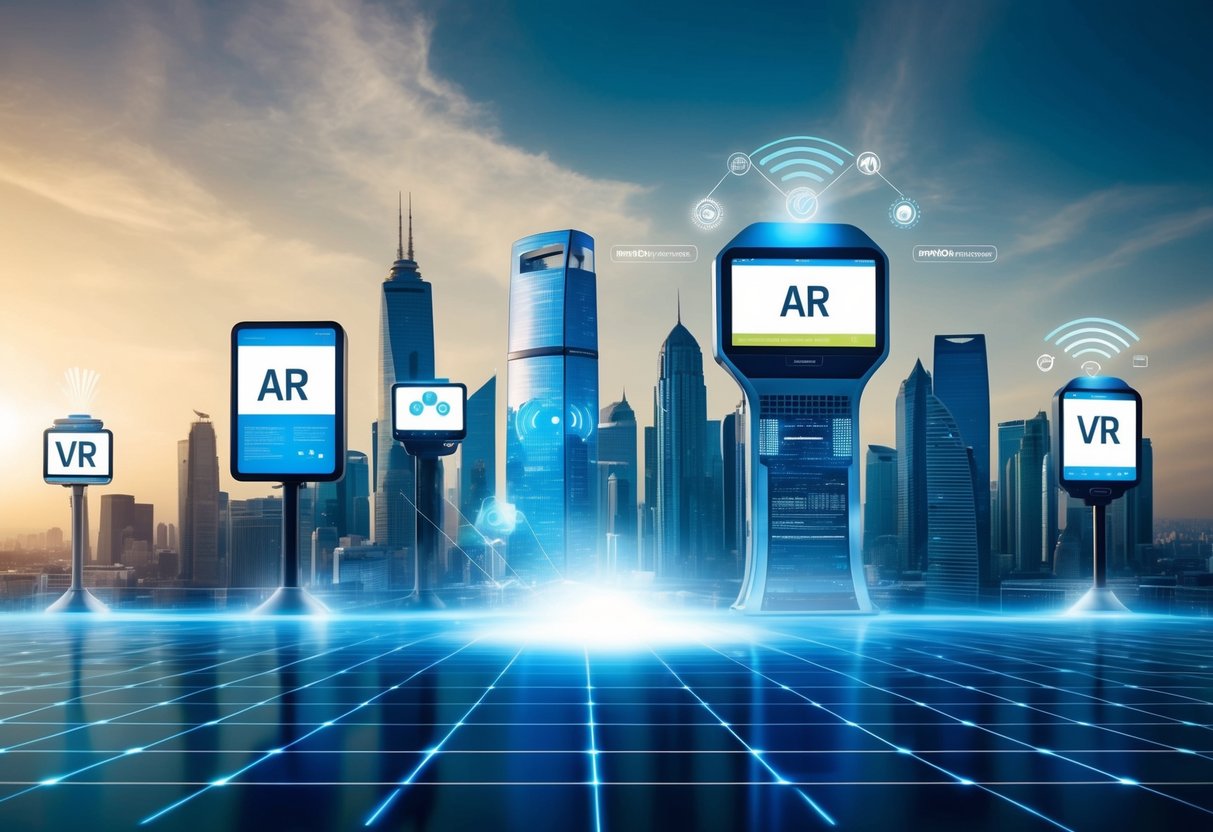
Augmented reality and virtual reality have transformed marketing approaches over the past few decades. These technologies have progressed from experimental novelties to powerful tools that reshape consumer experiences and brand interactions.
Historical Milestones
The roots of AR and VR in marketing trace back to the 1990s. Early AR applications emerged in the automotive industry, with virtual car configurators allowing customers to visualize vehicle options. VR made its mark in real estate, enabling virtual property tours.
In the 2000s, mobile AR apps gained traction. Brands like IKEA pioneered AR catalogs, letting users place virtual furniture in their homes. The release of Google Glass in 2013 sparked interest in wearable AR for marketing purposes.
VR headsets from Oculus and HTC in 2016 opened new possibilities for immersive brand experiences. These milestones laid the foundation for wider AR/VR adoption in marketing strategies.
From Novelty to Mainstream
Initially viewed as gimmicks, AR and VR have evolved into essential marketing tools. The Pokemon Go phenomenon in 2016 demonstrated AR’s mass appeal, attracting millions of users and showcasing location-based marketing potential.
Social media platforms integrated AR filters, making the technology accessible to a broader audience. Snapchat’s sponsored lenses and Instagram’s AR effects became popular for brand promotions.
VR found its place in experiential marketing, offering virtual product demos, travel experiences, and event participation. As hardware costs decreased and quality improved, more brands incorporated VR into their campaigns.
The COVID-19 pandemic accelerated AR/VR adoption in marketing. Virtual showrooms, AR try-on features, and VR events became essential for maintaining customer engagement during lockdowns.
Technological Advancements Propelling AR/VR
Improved hardware and software capabilities have driven AR/VR evolution in marketing. High-resolution displays, precise motion tracking, and realistic rendering enhance immersion and user experience.
5G networks enable faster data transmission, supporting more complex AR applications and real-time VR experiences. Cloud computing facilitates seamless content delivery and updates for AR/VR marketing campaigns.
AI and machine learning integration enhances personalization in AR/VR marketing. These technologies enable real-time content adaptation based on user behavior and preferences.
Haptic feedback and spatial audio advancements are making VR experiences more lifelike. In AR, computer vision improvements allow for better object recognition and environmental understanding, creating more natural interactions.
The AR/VR Marketing Ecosystem

The AR/VR marketing ecosystem comprises diverse players, innovative software platforms, and cutting-edge hardware. These components work together to create immersive experiences that revolutionize how brands engage with consumers.
Key Players and Stakeholders
Major tech companies like Apple, Google, and Facebook have heavily invested in AR/VR technologies. They’re joined by specialized AR/VR firms such as Magic Leap and Niantic. Advertising agencies and brands are also key stakeholders, leveraging these technologies for campaigns.
Content creators and 3D artists play a crucial role in developing immersive experiences. Retailers use AR/VR to enhance shopping experiences, while education and training sectors employ them for interactive learning.
We’re seeing increased collaboration between tech companies and traditional industries to integrate AR/VR into marketing strategies.
Software and Platform Providers
Unity and Unreal Engine lead in AR/VR content development. These platforms offer tools for creating realistic 3D environments and interactive experiences.
AR-specific platforms like Vuforia and ARKit enable developers to build augmented reality applications. Social media giants Facebook and Snapchat provide AR filters and effects for user engagement.
Cloud-based solutions are emerging to support AR/VR content distribution and analytics. These platforms help marketers track user engagement and optimize campaigns in real-time.
Hardware Innovations and Developments
VR headsets from Oculus, HTC, and Sony dominate the market. These devices offer increasingly realistic visuals and improved comfort for extended use.
AR smart glasses are evolving, with products like Microsoft HoloLens and Magic Leap One targeting enterprise applications. Consumer-focused AR glasses are in development by Apple and Google.
Haptic feedback devices enhance immersion by simulating touch sensations. Eye-tracking technology improves rendering efficiency and enables more natural interactions.
We’re witnessing advancements in mobile AR capabilities, with smartphones becoming powerful platforms for augmented reality experiences.
Understanding AR and VR User Experience
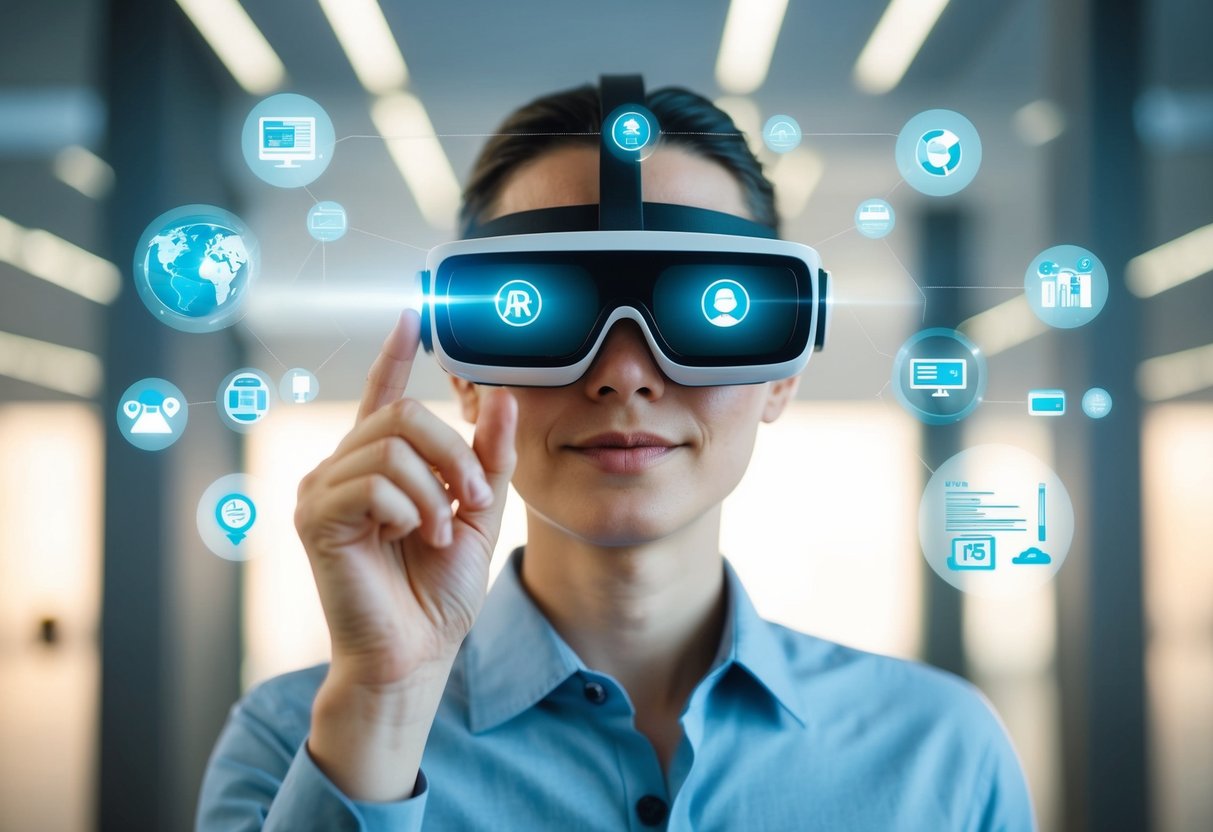
AR and VR technologies create distinct user experiences that fundamentally reshape how people interact with digital content. These immersive platforms offer unique opportunities and challenges for engaging users.
User Interaction with AR/VR
AR overlays digital elements onto the real world, allowing users to interact with virtual objects in their physical environment. Users can view AR content through smartphones, tablets, or specialized glasses. This blending of realities enables intuitive interactions like placing virtual furniture in a room or trying on digital clothing.
VR, in contrast, transports users to fully simulated environments. Through VR headsets and controllers, users become fully immersed in digital worlds. This technology enables experiences ranging from virtual tours to interactive training simulations. VR interactions often involve hand gestures, head movements, and voice commands.
Both AR and VR leverage spatial computing, letting users manipulate digital objects in three-dimensional space. This natural interaction method reduces the learning curve for new users.
Design Considerations for Engagement
Creating compelling AR and VR experiences requires careful attention to user comfort and engagement. For AR, designers must consider how digital elements integrate seamlessly with the real world. This includes factors like proper scaling, lighting, and occlusion.
VR design focuses on creating believable virtual environments. Key considerations include:
- Comfortable movement mechanics
- Intuitive user interfaces
- Realistic physics simulations
- Minimizing motion sickness
Both AR and VR benefit from user-centered design approaches. This involves extensive user testing to refine interactions and ensure accessibility. Designers must also consider the limitations of current hardware, such as field of view restrictions or display resolution.
Measuring User Immersion
Evaluating the effectiveness of AR and VR experiences involves assessing user immersion and engagement. Common metrics include:
- Time spent in the experience
- User retention rates
- Task completion rates
- Physiological responses (e.g., heart rate, eye tracking)
Qualitative feedback through surveys and interviews provides valuable insights into user perceptions. Researchers also use presence questionnaires to measure the sense of “being there” in virtual environments.
For AR, metrics may focus on how well digital content integrates with the real world. This can include measuring the accuracy of object placement or the believability of augmented elements.
VR evaluation often emphasizes the quality of immersion and the reduction of simulator sickness. Tracking user movements and interactions within the virtual space helps refine the experience.
Strategic Implementation of AR/VR in Marketing
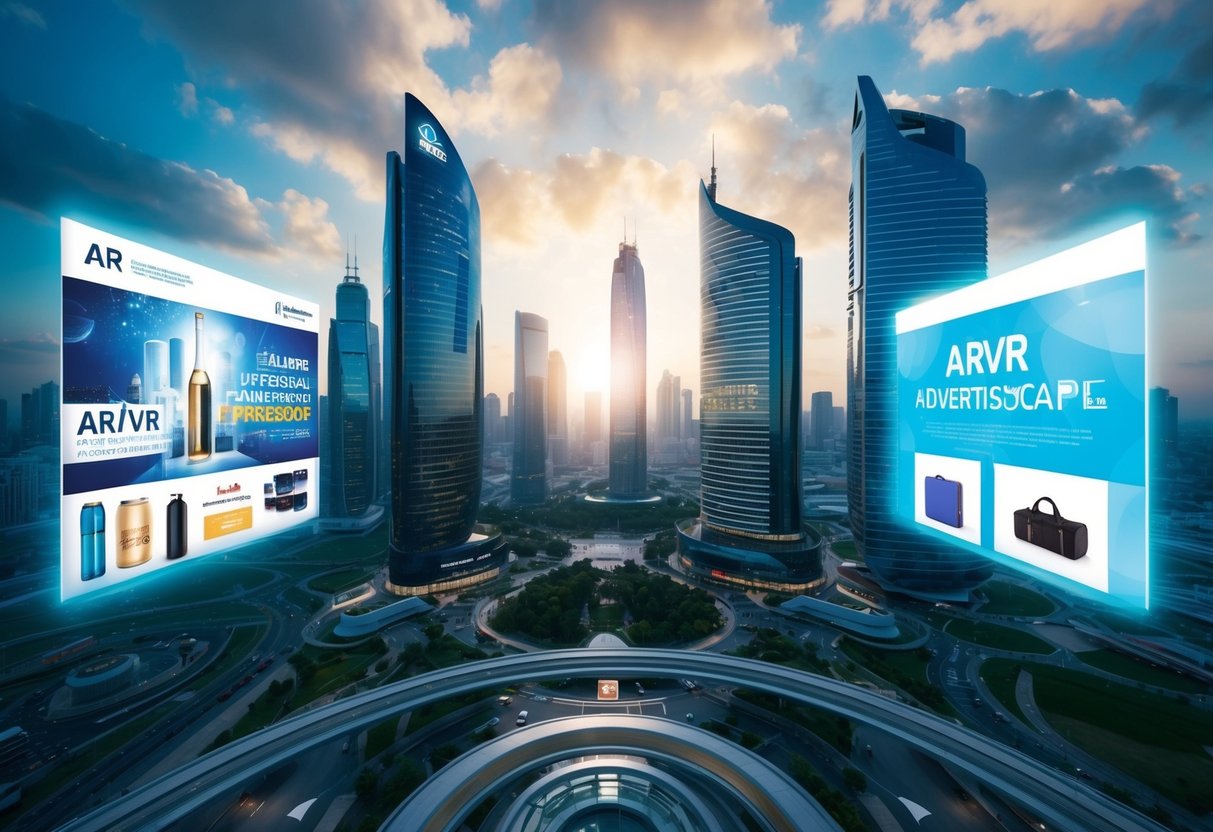
AR and VR technologies offer powerful tools for marketers to create immersive, engaging experiences. Implementing these technologies strategically can transform how brands connect with consumers and drive measurable results.
Setting Objectives and KPIs
We start by defining clear objectives for our AR/VR marketing initiatives. These may include increasing brand awareness, boosting engagement, or driving sales conversions.
Next, we establish key performance indicators (KPIs) to measure success. For AR campaigns, metrics like app downloads, scan rates, and interaction time are crucial. VR initiatives often focus on metrics such as time spent in virtual environments and completion rates for virtual experiences.
It’s essential to align AR/VR objectives with overall marketing goals. This ensures these technologies enhance our broader strategy rather than becoming isolated gimmicks.
Integrating AR/VR into Marketing Campaigns
We seamlessly blend AR/VR elements into multi-channel marketing efforts. This integration creates cohesive brand experiences across touchpoints.
For product marketing, we use AR to let customers visualize items in their own space before purchasing. Virtual showrooms and 3D product demos enhance the online shopping experience.
VR shines in storytelling campaigns, allowing us to transport audiences to immersive brand worlds. We create virtual events, tours, and interactive narratives that forge deeper emotional connections.
Social media integration amplifies reach. We design AR filters and VR content specifically for sharing on platforms like Instagram and TikTok.
Cross-Platform Marketing with AR/VR
We ensure our AR/VR experiences work across multiple devices and platforms. This maximizes accessibility and reach for our target audience.
Mobile AR applications cater to smartphone users, while WebAR brings augmented experiences directly to web browsers. For VR, we develop content for popular headsets and explore WebVR options for broader accessibility.
Cross-platform analytics tools help us track user behavior across different devices. This data informs our optimization efforts and helps refine our AR/VR marketing strategy.
We also consider how AR and VR can complement each other. For example, an AR mobile app might offer a teaser for a more immersive VR experience, creating a seamless journey between platforms.
AR/VR Content Creation for Marketing
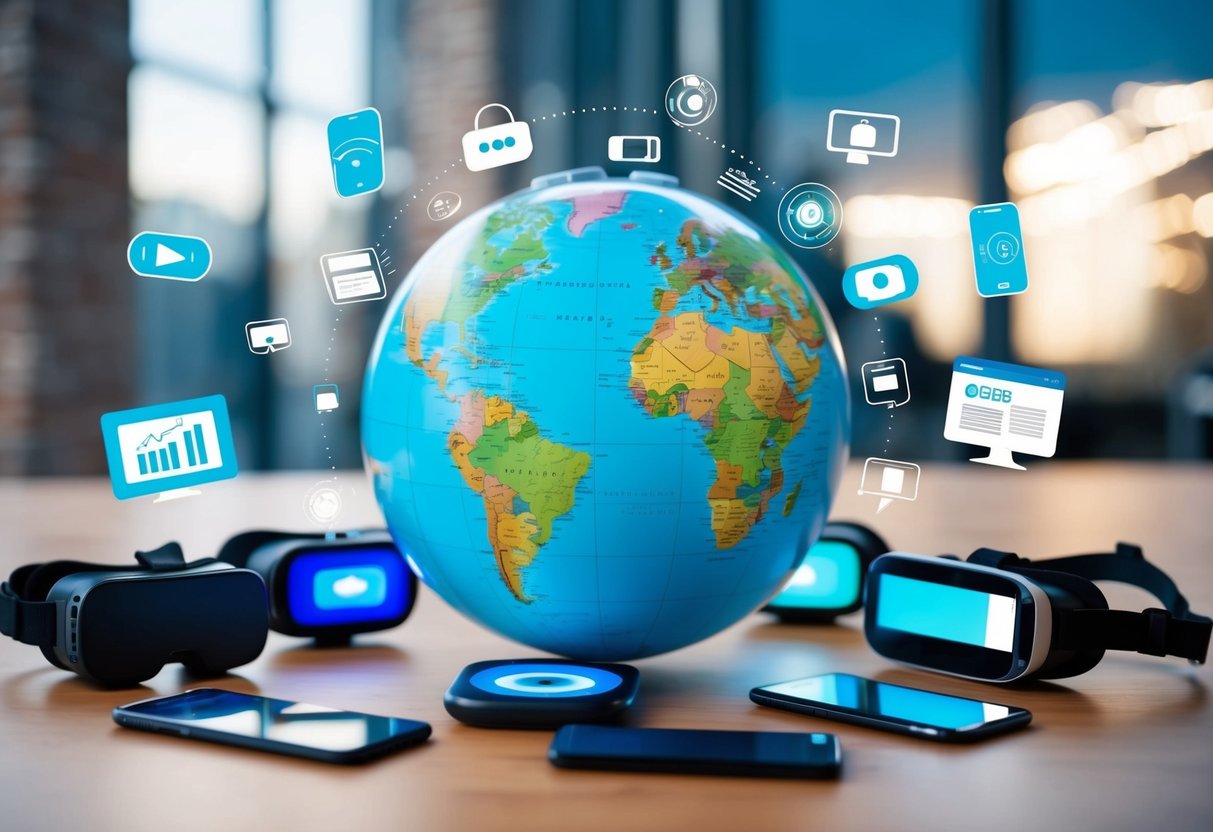
Creating compelling AR and VR content is essential for effective marketing campaigns. We’ll explore key aspects of developing immersive experiences, leveraging storytelling techniques, and crafting brand narratives in virtual environments.
Developing Compelling AR/VR Content
AR and VR content creation requires a blend of technical skill and creative vision. We start by identifying our marketing goals and target audience. This informs the choice between AR or VR, depending on which better suits our objectives.
For AR, we focus on enhancing real-world environments with digital overlays. This might involve creating 3D product models, interactive packaging, or virtual try-on experiences.
VR content often involves building entire virtual worlds. We design immersive environments that align with brand identity and campaign themes. This can include 360-degree videos, interactive showrooms, or virtual product demonstrations.
Both AR and VR content benefit from high-quality 3D modeling, texturing, and animation. We ensure smooth performance across various devices to maximize accessibility.
Storytelling in an Immersive Environment
Immersive storytelling in AR/VR offers unique opportunities to engage audiences. We craft narratives that take full advantage of the 3D space and interactivity these technologies provide.
In AR, we can tell stories by layering digital elements onto the user’s surroundings. This might involve animated characters guiding users through a product’s features or historical figures appearing in real locations.
VR allows for complete control over the user’s environment. We create narratives where users become active participants, making choices that influence the story’s progression.
We focus on creating emotional connections through sensory experiences. Sound design, haptic feedback, and visual cues all play crucial roles in immersing users in our brand’s story.
Branding and Consumer Narrative
AR and VR offer powerful tools for building brand identity and shaping consumer narratives. We create experiences that reinforce brand values and messaging in memorable ways.
Virtual brand worlds allow consumers to interact with products in unique settings. We might design a VR forest to showcase outdoor gear or an AR app that brings a company’s mascot to life in the user’s home.
Personalization is key. We use data to tailor AR/VR experiences to individual preferences, creating a stronger connection between consumer and brand.
User-generated content can be incorporated into AR/VR campaigns. We encourage customers to share their immersive experiences, extending the reach of our marketing efforts through social media and word-of-mouth.
Consumer Interaction with AR/VR
AR and VR technologies are transforming how consumers engage with brands and products. These immersive tools enable real-time feedback, personalized experiences, and user-generated content integration.
Real-time Data and Feedback
AR and VR platforms collect valuable consumer data in real-time. Eye-tracking technology in VR headsets monitors user attention, providing insights into product preferences.
Gesture recognition systems analyze how users interact with virtual objects, revealing usability issues. This immediate feedback allows marketers to refine product designs and user experiences quickly.
Heat maps generated from VR interactions highlight popular features or areas of interest within virtual environments. We can use this data to optimize store layouts or product placements in both digital and physical spaces.
Creating Personalized Experiences
AR and VR enable highly customized marketing experiences. Virtual try-on features allow customers to visualize products on themselves before purchasing.
AI-powered virtual assistants in VR environments offer personalized product recommendations based on user preferences and behavior. These assistants can answer questions and guide customers through the buying process.
Customizable virtual showrooms let consumers explore products in tailored environments. For example, a furniture company might allow users to place virtual items in a 3D model of their own home.
Leveraging User Generated Content
AR filters on social media platforms encourage users to create and share branded content. This user-generated material increases engagement and extends brand reach organically.
VR social spaces allow consumers to interact with products and share experiences with friends, creating virtual word-of-mouth marketing.
Brands can host virtual events where users contribute to product designs or marketing campaigns. This collaborative approach fosters a sense of community and brand loyalty.
AR-enabled packaging invites customers to scan products for additional content, such as recipe videos or user reviews. This integration of physical products with digital experiences enhances post-purchase engagement.
Impact of AR/VR on Consumer Behavior
AR and VR technologies are revolutionizing how consumers interact with brands and make purchasing decisions. These immersive tools create novel experiences that shape consumer perceptions and actions.
Influencing the Purchase Decision
AR and VR provide consumers with vivid product visualizations and interactive experiences. Customers can virtually try on clothing or see how furniture looks in their home before buying. This reduces uncertainty and boosts confidence in purchases.
We’ve observed that AR product previews increase conversion rates by up to 40% for some retailers. VR showrooms allow car buyers to customize and test drive vehicles without visiting a dealership.
These technologies also enable virtual store walkthroughs. Consumers can browse shelves and examine products in 3D from anywhere. This convenience factor often leads to higher purchase intent.
Enhancing Brand Loyalty
Immersive AR/VR experiences forge stronger emotional connections between consumers and brands. Interactive branded content creates memorable impressions that boost recall and affinity.
Many companies now offer AR apps that gamify product interactions. These fun, shareable experiences increase engagement and time spent with the brand.
VR brand worlds transport users into fully-realized environments that tell a compelling story. We’ve seen this approach successfully used by travel companies to preview destinations and hotels.
These technologies make brands feel more innovative and forward-thinking. This perceived technological leadership often translates to increased trust and loyalty among consumers.
Changing Retail and Shopping Experiences
AR and VR are blurring the lines between physical and digital retail. Smart mirrors with AR capabilities let shoppers quickly try on multiple outfits. VR headsets transport customers to virtual showrooms with endless aisles.
These technologies reduce friction in the shopping journey. Consumers can instantly access product information, reviews, and comparisons by scanning items with AR.
We’re also seeing VR used for immersive product demonstrations and tutorials. This helps consumers better understand complex products before purchase.
For ecommerce, AR apps that place products in a user’s space boost buyer confidence. This leads to fewer returns and higher customer satisfaction.
Global Market Trends in AR/VR
The AR and VR market is experiencing rapid growth worldwide, with diverse regional adoption patterns and industry-specific applications emerging. Successful marketing campaigns are leveraging these technologies to create immersive brand experiences.
Regional Adoption and Growth Rates
North America leads in AR/VR adoption, followed closely by Asia-Pacific. The global AR/VR market is projected to reach $62 billion by 2029, growing at a CAGR of 8.97% from 2024 to 2029. Europe shows steady growth, while emerging markets in Latin America and Africa are catching up.
China and Japan are driving APAC’s strong performance. The U.S. remains a key player, with Silicon Valley spearheading innovation. India’s market is rapidly expanding due to its large tech-savvy population.
Industry-Specific Use Cases
Retail uses AR for virtual try-ons and product visualization. Healthcare employs VR for surgical training and patient therapy. Education sector adopts AR/VR for interactive learning experiences.
Manufacturing utilizes AR for assembly line guidance and maintenance. Real estate leverages VR for virtual property tours. Gaming and entertainment continue to be major drivers of AR/VR growth.
The automotive industry implements AR in heads-up displays and VR in design processes.
Case Studies of Successful AR/VR Campaigns
IKEA’s AR app allows customers to visualize furniture in their homes before purchase. This led to a 35% increase in sales for featured products.
Pepsi Max’s AR bus shelter campaign in London created a viral sensation, boosting brand awareness by 40%.
Volvo’s VR test drive experience for a new car model resulted in a 14% increase in sales leads.
L’Oréal’s AR makeup try-on feature in their app drove a 52% increase in conversion rates for online cosmetic purchases.
Challenges and Limitations in AR/VR Marketing
AR and VR marketing face several significant hurdles that can impact their effectiveness and adoption. These include technical issues, privacy concerns, and resistance from both consumers and businesses.
Technical Constraints and Compatibility Issues
AR and VR technologies require substantial computing power and high-speed internet connections. Many devices struggle to render complex virtual environments smoothly, leading to laggy or glitchy experiences. This can frustrate users and diminish the impact of marketing campaigns.
Compatibility across different platforms and devices remains a challenge. Marketers must often develop multiple versions of their AR/VR content to ensure it works on various smartphones, headsets, and operating systems. This increases development costs and time.
The need for specialized hardware, like VR headsets, can limit the reach of some campaigns. Not all consumers have access to or are willing to invest in these devices.
Privacy Concerns and Data Security
AR and VR applications collect vast amounts of user data, including physical movements, eye tracking, and even biometric information. This raises serious privacy concerns among consumers.
There’s a risk of personal data breaches if proper security measures aren’t in place. Hackers could potentially access sensitive information gathered through AR/VR devices.
Some users worry about the potential for surveillance through AR/VR technology, especially in public spaces. This can make them hesitant to engage with AR marketing campaigns.
Overcoming Skepticism and Resistance
Many businesses remain skeptical about the ROI of AR/VR marketing due to high implementation costs. Initial investments in hardware, software, and content creation can be substantial.
Some consumers view AR/VR as gimmicky or unnecessary, preferring traditional marketing methods. Overcoming this perception requires creating truly valuable and engaging experiences.
There’s a learning curve associated with using AR/VR technology. Both marketers and consumers need time to adapt and become comfortable with these new tools.
Resistance to change within organizations can slow AR/VR adoption. Marketing teams may need to convince stakeholders of the technology’s value and potential impact on the bottom line.
Future Projections for AR/VR in Marketing
AR and VR technologies are poised to revolutionize global marketing strategies in the coming years. We expect to see rapid advancements in immersive experiences, wider adoption across industries, and innovative applications that reshape how brands connect with consumers.
Emerging Technologies and Predictions
By 2026, the AR/VR market is projected to reach $50.9 billion, growing at a compound annual rate of 32.3%. This growth will likely be driven by more sophisticated hardware and software solutions. We anticipate seeing:
- Lightweight, stylish AR glasses replacing bulky headsets
- Haptic feedback systems enhancing tactile experiences
- AI-powered virtual assistants guiding users through immersive brand interactions
- Photorealistic 3D product visualizations for e-commerce
These advancements will enable marketers to create highly engaging and personalized customer experiences. As costs decrease and user adoption increases, AR/VR marketing campaigns will become more commonplace across various industries.
Scaling AR/VR for Global Outreach
To reach global audiences, marketers will need to develop scalable AR/VR solutions. We expect to see:
- Cloud-based AR/VR platforms for easy content distribution
- Localization tools to adapt immersive experiences for different cultures
- 5G networks enabling high-quality AR/VR streaming worldwide
- Cross-platform compatibility for seamless experiences across devices
These developments will allow brands to create consistent AR/VR marketing campaigns that resonate with diverse international audiences. By leveraging cloud infrastructure and advanced networking, companies can deliver immersive content to users regardless of their location or device preferences.
Potential Impacts on Digital Marketing Landscapes
AR/VR technologies will significantly reshape digital marketing strategies. Key impacts include:
- Enhanced product demonstrations and virtual try-ons
- Immersive storytelling for deeper brand connections
- Virtual events and trade shows reaching global audiences
- Data-driven insights from user interactions in virtual environments
These changes will blur the lines between physical and digital marketing channels. Brands that successfully integrate AR/VR into their marketing mix will gain a competitive edge by offering unique, memorable experiences that drive customer engagement and loyalty.
Frequently Asked Questions
AR and VR technologies are transforming global marketing strategies, offering innovative ways to engage customers and create immersive brand experiences. These tools provide unique opportunities for businesses to showcase products, enhance customer interactions, and expand their global reach.
How can AR and VR be used for marketing?
AR and VR offer diverse applications in marketing. AR can overlay digital content onto the real world, allowing customers to virtually try on products or visualize items in their homes. VR creates fully immersive experiences, transporting users to virtual showrooms or product demonstrations.
We’ve seen successful implementations in retail, real estate, and tourism sectors. For example, IKEA’s AR app enables customers to place virtual furniture in their rooms before purchasing.
What are the benefits of using AR and VR in global marketing strategies?
AR and VR technologies provide numerous advantages in global marketing. They overcome language barriers through visual communication and create memorable brand experiences. These tools also enable businesses to showcase products without physical limitations.
AR and VR reduce the need for physical stores, cutting costs for global expansion. They offer data collection opportunities, providing insights into customer preferences and behaviors across different markets.
How does VR marketing differ from traditional marketing approaches?
VR marketing creates immersive experiences that traditional methods can’t match. It allows customers to interact with products in a virtual environment, providing a deeper understanding of features and benefits.
Unlike traditional marketing, VR can transport users to different locations or scenarios, making it ideal for travel, real estate, and event marketing. VR also offers higher engagement rates and longer interaction times compared to conventional advertising.
What are some successful case studies of AR in digital marketing?
Several brands have effectively leveraged AR in their marketing campaigns. Sephora’s Virtual Artist app allows customers to try on makeup virtually, boosting online sales and reducing returns.
Pepsi Max’s AR bus shelter campaign in London created a buzz by surprising commuters with lifelike digital overlays. Nike’s SNKRS app uses AR to create scavenger hunt-style promotions for limited edition sneakers, driving engagement and sales.
What strategies should companies adopt for integrating VR into their marketing campaigns?
Companies should focus on creating valuable, immersive experiences that align with their brand identity. It’s crucial to ensure the VR content is accessible and user-friendly across different devices and platforms.
Integrating VR with other marketing channels can maximize its impact. Companies should also consider partnering with VR content creators or investing in in-house capabilities to produce high-quality experiences.
What is the projected growth of the AR and VR market in the context of global marketing?
The AR and VR market is poised for significant growth in global marketing. Industry reports project the AR market to reach $340 billion by 2028, with a compound annual growth rate of 21% between 2022 and 2028.
VR is also expected to see substantial growth, particularly in sectors like e-commerce, automotive, and real estate. As technology improves and becomes more accessible, we anticipate wider adoption of AR and VR in marketing strategies worldwide.
