
Understanding International SEO

International SEO expands e-commerce reach beyond domestic borders. It involves tailoring content and optimization strategies for global audiences.
What Is International SEO?
International SEO optimizes websites for search engines in multiple countries and languages. It ensures visibility and relevance to users worldwide. This practice involves:
• Targeting specific regions or countries
• Adapting content for local languages and cultures
• Implementing proper URL structures
• Using hreflang tags for language targeting
We focus on creating a seamless user experience for international visitors while maintaining strong search engine rankings across different locales.
Importance of International SEO for E-Commerce
International SEO is crucial for e-commerce growth. It opens doors to new markets and customer bases. Benefits include:
• Increased global visibility
• Higher traffic from international sources
• Improved conversion rates in target markets
• Enhanced brand recognition worldwide
By implementing effective international SEO strategies, e-commerce businesses can significantly expand their customer reach and revenue potential.
Differences Between Domestic and International SEO
International SEO requires a more complex approach than domestic SEO. Key differences include:
- Language considerations: Content must be translated and localized.
- Cultural nuances: Marketing messages need adaptation for different cultures.
- Search engine preferences: Some countries favor local search engines over Google.
- Legal requirements: Compliance with various international regulations is necessary.
We also consider factors like domain structure (ccTLDs vs. subdomains), local link building, and region-specific keywords when developing international SEO strategies.
Developing an International SEO Strategy

A successful international SEO strategy requires careful planning and execution. We’ll explore key elements to optimize your e-commerce website for global audiences and search engines.
Market Research and International Targeting
We start by analyzing potential markets for expansion. This involves studying search volumes, competition levels, and consumer behavior in different countries.
Tools like Google’s Market Finder can help identify promising markets based on search interest and purchasing power. We also examine local search engines’ market share, as Google isn’t dominant everywhere.
Cultural nuances and regional preferences play a crucial role. Understanding these factors helps tailor our approach to each market effectively.
Identifying Target Languages and Countries
Selecting the right languages and countries is crucial for our international SEO efforts. We analyze website traffic data to spot regions already showing interest in our products.
We consider factors like market size, economic stability, and e-commerce adoption rates. This helps prioritize countries with the highest potential for success.
Language selection goes beyond national boundaries. For instance, Spanish content may target multiple countries across Europe and Latin America.
Localizing Content for Different Markets
Content localization is more than mere translation. We adapt our content to resonate with local audiences, considering cultural norms, idioms, and preferences.
Key areas for localization include:
- Product descriptions
- Blog posts and articles
- Meta tags and URLs
- Images and multimedia
We work with native speakers to ensure our content feels authentic and relevant. This approach helps build trust with local customers and improves search rankings.
Building a Multilingual Keyword Strategy
A robust keyword strategy forms the backbone of our international SEO efforts. We conduct thorough keyword research for each target language and region.
This process involves:
- Translating main keywords
- Identifying local synonyms and variations
- Analyzing search volumes and competition
We use tools like Google Keyword Planner and local SEO tools to gather accurate data. Our strategy accounts for differences in search behavior across markets.
We also consider long-tail keywords specific to each region, as these often have lower competition and higher conversion rates.
Technical SEO Considerations
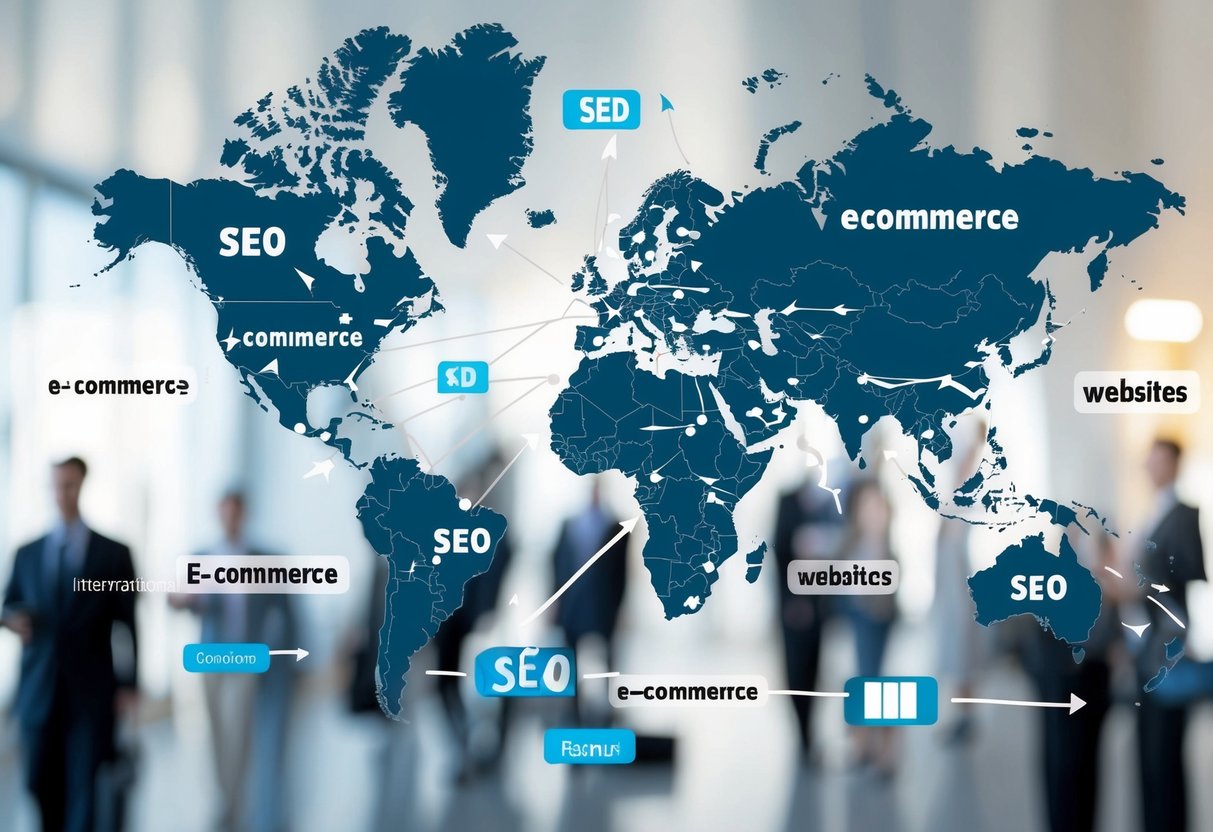
Optimizing the technical aspects of your e-commerce website is crucial for international SEO success. We’ll explore key factors that impact global search performance and user experience.
Website Structure for International Audiences
A well-organized website structure is essential for targeting international audiences. We recommend using a clear hierarchy that separates content by language and region. This approach helps search engines understand the relationship between different versions of your site.
Consider implementing a global navigation that allows users to easily switch between languages or regions. Use consistent URL patterns and internal linking structures across all versions of your site.
Include localized sitemaps for each language version to help search engines discover and index your content more efficiently.
URL Structures: Subdirectories, Subdomains, and CCTLDs
Choosing the right URL structure is critical for international SEO. Three main options are available:
- Subdirectories (example.com/fr/)
- Subdomains (fr.example.com)
- Country-code top-level domains (CCTLDs) (example.fr)
Each option has pros and cons:
- Subdirectories are easier to manage and maintain SEO authority.
- Subdomains offer more flexibility in hosting and geotargeting.
- CCTLDs provide the strongest signal for local relevance but require more resources.
Select the structure that best aligns with your business goals and technical capabilities.
Hreflang Tags for Language and Regional URLs
Implementing hreflang tags is crucial for signaling the language and regional targeting of your pages to search engines. These tags help prevent duplicate content issues and ensure users see the most relevant version of your site.
Add hreflang tags to thesection of your HTML or in your XML sitemap. Include tags for all language variations, including the default version:
<link rel="alternate" hreflang="en-us" href="https://example.com/en-us/" />
<link rel="alternate" hreflang="fr-fr" href="https://example.com/fr-fr/" />
<link rel="alternate" hreflang="de-de" href="https://example.com/de-de/" />
Ensure your hreflang implementation is consistent across all pages and regularly audit for errors.
Ensuring Mobile Friendliness and Loading Speed
Mobile optimization and fast loading speeds are crucial for international e-commerce success. Different regions may have varying internet speeds and device preferences, so we must cater to a wide range of users.
Implement responsive design to ensure your site adapts to various screen sizes. Use lazy loading for images and minimize HTTP requests to improve load times.
Consider using Content Delivery Networks (CDNs) to serve assets from locations closer to your users, reducing latency. Compress images and minify CSS and JavaScript files to further enhance performance.
Regularly test your site’s mobile-friendliness and speed using tools like Google’s Mobile-Friendly Test and PageSpeed Insights. Address any issues promptly to maintain a competitive edge in global markets.
Content Strategy for E-Commerce
A robust content strategy is crucial for international e-commerce success. We’ll explore key aspects of creating and managing content that resonates across borders and drives global sales.
Cultural Sensitivity and Localization
Cultural nuances significantly impact e-commerce content effectiveness. We recommend thorough research of target markets to understand local customs, holidays, and consumer preferences. Adapting product names, descriptions, and marketing messages is essential. For example, color associations vary across cultures – white signifies purity in Western countries but mourning in some Asian cultures.
Localization goes beyond translation. It involves tailoring imagery, units of measurement, and date formats to each market. We suggest working with native speakers to ensure content feels authentic and relatable to local audiences.
Product Descriptions and Local Relevance
Effective product descriptions blend SEO optimization with local relevance. We advise using region-specific keywords and phrases in titles and descriptions. This improves search visibility and connects with customers in their language.
Consider local search trends and popular products when prioritizing content creation. Highlight features that matter most to each market. For instance, emphasizing durability might resonate more in some regions, while eco-friendliness could be a key selling point in others.
Use clear, concise language and bullet points for easy scanning. Include relevant sizing information, care instructions, and any local certifications or compliance standards.
Managing and Updating Content
Maintaining up-to-date, accurate content across multiple markets is challenging but crucial. We recommend implementing a centralized content management system (CMS) to streamline updates and ensure consistency.
Create a content calendar that accounts for regional events, seasons, and trends. Regular audits help identify outdated information or broken links. Consider using automated translation tools for initial drafts, but always have native speakers review and refine the content.
Encourage local teams to provide feedback on content performance and cultural relevance. This input is invaluable for continuous improvement and maintaining market-specific accuracy.
Link Building and Local Citations

Effective international link building and local citations are crucial for e-commerce success in global markets. These strategies enhance visibility, credibility, and search rankings across different regions.
Acquiring Local Backlinks
We recommend partnering with local businesses, organizations, and influencers to acquire region-specific backlinks. Guest posting on local blogs and news sites can boost your authority in target markets. Participate in local events or sponsor community initiatives to earn mentions and links from local websites.
Creating location-specific content that appeals to regional audiences can naturally attract backlinks. Develop resources, guides, or tools tailored to each market’s needs and preferences.
Consider reaching out to local chambers of commerce, business associations, and industry groups for potential link opportunities. These connections can provide valuable local signals to search engines.
Influencer Partnerships in Target Markets
Collaborating with influencers in your target markets can significantly expand your reach and earn quality backlinks. We suggest identifying influencers who align with your brand values and have a strong following in specific regions.
Provide influencers with unique discount codes or affiliate links to track their impact on your e-commerce sales. This approach encourages them to promote your products authentically.
Consider co-creating content with influencers, such as product reviews, tutorials, or localized buying guides. This content can be shared on their platforms, linking back to your e-commerce site.
Building Trust with Local Signals
Local citations play a crucial role in building trust and improving local search visibility. We recommend listing your e-commerce business in reputable local directories, review sites, and industry-specific platforms.
Ensure your business information (name, address, phone number) is consistent across all listings. This consistency reinforces your local presence to search engines.
Encourage satisfied customers to leave reviews on local platforms. Positive reviews not only boost your credibility but also serve as trust signals for search engines.
Optimize your Google My Business listing for each target location. Include accurate business details, high-quality images, and region-specific offers to enhance local visibility.
Social Media and International SEO
Social media plays a crucial role in international SEO for e-commerce websites. It allows brands to connect with global audiences, build brand awareness, and drive traffic to localized sites. Effective social strategies can boost search rankings and engagement across different markets.
Engaging with International Audiences
We recommend creating separate social media accounts for each target market. This approach allows for tailored content in local languages and cultural contexts. Posting schedules should align with time zones and local usage patterns.
Responding to comments and messages promptly shows attentiveness to international customers. User-generated content, like reviews and photos, can be leveraged to increase engagement and trust.
Hashtags should be researched for each market, as popular tags may differ between countries. Local influencers can help extend reach and credibility within specific regions.
Localized Social Media Marketing Strategies
Each market requires a unique social media strategy. Popular platforms vary by country – while Facebook is widespread, networks like VK in Russia or WeChat in China may be more effective in those regions.
Content should be adapted to local preferences and cultural norms. This includes using appropriate humor, references, and imagery. Holidays and events specific to each country present opportunities for themed campaigns.
Paid social advertising should target users based on location, language, and cultural interests. Ad copy and visuals must be localized for maximum impact.
Social Signals and SEO
While the direct impact of social signals on search rankings is debated, social media activity can indirectly boost SEO. Increased brand visibility and website traffic from social platforms can lead to more backlinks and improved search performance.
Social profiles often appear in search results, expanding a brand’s digital footprint. Optimizing these profiles with relevant keywords and links to localized sites can improve visibility.
Sharing content on social media can accelerate its indexing by search engines. This is particularly valuable for time-sensitive offers or new product launches in international markets.
Legal and Regulatory Compliance
Legal and regulatory compliance is crucial for international e-commerce success. We’ll explore key data privacy regulations and navigate e-commerce laws across different countries.
Understanding GDPR and Data Privacy Regulations
The General Data Protection Regulation (GDPR) sets strict standards for data protection in the EU. It applies to any business handling EU residents’ data, regardless of location.
Key GDPR requirements include:
- Obtaining explicit consent for data collection
- Implementing data protection measures
- Allowing users to access and delete their data
- Reporting data breaches within 72 hours
Non-compliance can result in fines up to €20 million or 4% of global annual turnover.
Other regions have similar laws. The California Consumer Privacy Act (CCPA) protects California residents’ data rights. Brazil’s Lei Geral de Proteção de Dados (LGPD) aligns closely with GDPR.
Navigating E-Commerce Laws in Different Countries
E-commerce laws vary significantly across countries, impacting areas like:
- Consumer protection
- Electronic contracts
- Taxation
- Product safety
In the US, the Federal Trade Commission (FTC) enforces e-commerce regulations. Key rules include:
- Clear disclosure of terms and conditions
- Accurate product descriptions
- Prompt shipping and refund policies
China’s E-Commerce Law requires online businesses to register with the government and protect intellectual property rights. The EU’s Digital Services Act focuses on transparency and accountability for online platforms.
We must research and comply with local laws in each target market to avoid legal issues and build customer trust.
Monitoring and Analyzing SEO Performance
Effective monitoring and analysis are crucial for optimizing international SEO strategies. We’ll explore key tools, methods, and approaches to track performance and stay ahead in global markets.
Tools and Methods for SEO Reporting
Google Analytics and Google Search Console are essential for tracking website traffic and search performance. We use these to monitor organic traffic, bounce rates, and keyword rankings across different countries and languages.
SEMrush and Ahrefs offer valuable insights into competitor strategies and backlink profiles. These tools help us identify opportunities and track our site’s visibility in various international markets.
For local SEO tracking, we rely on BrightLocal and Moz Local. They provide data on local search rankings and help manage business listings across different countries.
Custom dashboards in tools like Data Studio allow us to create comprehensive reports tailored to each client’s specific KPIs and international markets.
Adjusting Strategies Based on Performance Metrics
We regularly review key metrics to refine our international SEO approach. Traffic sources by country help us identify which markets are performing well and where we need to focus more efforts.
Conversion rates for different languages and regions guide our content strategy. If certain pages underperform in specific markets, we analyze and adapt the content to better suit local preferences.
Page load times across different regions are crucial. We optimize site speed for various international servers to ensure a smooth user experience globally.
Bounce rates and time on site for different language versions help us gauge content relevance. We use these insights to improve engagement and tailor our content to each market’s needs.
Competitor Analysis in International Markets
We conduct regular competitor audits in each target market. This involves analyzing their keyword strategies, content types, and backlink profiles specific to different countries.
Local search rankings are compared against competitors to identify gaps and opportunities. We use tools like SEMrush’s Position Tracking to monitor our rankings alongside competitors in various locations.
Social media engagement across different platforms popular in target countries is monitored. This helps us understand which content types resonate in specific markets and adapt our social strategies accordingly.
We analyze competitors’ localization efforts, including translation quality and cultural adaptations. This informs our own localization strategy and helps us identify areas where we can outperform competitors in specific markets.
The Role of E-Commerce Platforms in SEO
E-commerce platforms play a crucial role in shaping a website’s SEO performance. They provide the foundation for optimizing product pages, site structure, and technical elements that impact search rankings.
Platform-Specific SEO Features and Limitations
Different e-commerce platforms offer varying SEO capabilities. Shopify, for example, provides built-in SEO tools for optimizing meta titles and descriptions. WooCommerce, as a WordPress plugin, leverages the CMS’s robust SEO ecosystem.
Some platforms may limit URL customization or impose restrictions on schema markup implementation. It’s essential to understand these constraints when choosing a platform.
We recommend evaluating the following SEO features:
- Customizable URLs and canonical tags
- Built-in XML sitemap generation
- Automatic image alt text population
- Integration with popular SEO plugins
Integrating with Marketplaces and Local E-Commerce Systems
Expanding to marketplaces like Amazon or eBay can boost visibility but requires careful SEO consideration. We must ensure consistent product information across channels to avoid duplicate content issues.
For local e-commerce, platforms that support location-based SEO are invaluable. Features like store locator pages and local inventory ads can significantly improve regional search performance.
Key integration points include:
- Product feed optimization for marketplaces
- Syncing inventory data with Google My Business
- Implementing hreflang tags for multi-language stores
Selecting the right e-commerce platform and leveraging its SEO capabilities can give online stores a competitive edge in search rankings.
Frequently Asked Questions
International SEO for e-commerce involves several key considerations and best practices. We’ll address common questions about strategy, optimization, platforms, country-specific ranking, compliance, and working with agencies.
What are the key steps in creating an international SEO strategy for an e-commerce site?
Developing an international SEO strategy starts with thorough market research. We identify target countries and languages based on potential demand and competition.
Next, we create a site structure that accommodates multiple languages and regions. This often involves using country-specific domains or subdomains.
We then focus on content localization, ensuring product descriptions and other site content are accurately translated and culturally appropriate.
How can I optimize my e-commerce website for multiple countries?
Implementing hreflang tags is crucial for indicating language and regional targeting to search engines. We use these tags to specify which version of a page should be shown to users in different locations.
Creating localized content goes beyond translation. We adapt product descriptions, pricing, and imagery to suit local preferences and customs.
Local link building and partnerships with region-specific influencers can significantly boost visibility in target markets.
What factors should I consider when choosing an e-commerce platform for the best international SEO results?
Look for platforms that support multiple languages and currencies out of the box. This functionality is essential for providing a seamless user experience across different markets.
The ability to create and manage country-specific subdomains or separate domains is another important feature to consider.
We also prioritize platforms with built-in SEO tools and the flexibility to customize meta tags, URLs, and site structure for each target market.
What are the best practices for ranking an e-commerce website in specific countries?
Hosting content on country-specific domains or subdomains can improve local rankings. This approach signals to search engines that the content is tailored for a particular region.
Building backlinks from local websites and directories enhances domain authority in specific countries. We focus on acquiring links from reputable sources within each target market.
Optimizing for local keywords and search trends is crucial. This involves researching and incorporating region-specific terms and phrases into product titles and descriptions.
How can I ensure my e-commerce site complies with Google’s international SEO guidelines?
Proper use of hreflang tags is essential for compliance. We implement these tags correctly to indicate language and regional targeting for each page.
Avoiding automatic redirects based on IP addresses is important. Instead, we offer users clear language and region selection options.
Ensuring consistent URLs and content across different language versions helps maintain a coherent site structure and prevents duplicate content issues.
What are the advantages of hiring an international SEO agency for my e-commerce business?
International SEO agencies bring specialized knowledge of global markets and search engine algorithms. This expertise can lead to more effective targeting and faster results.
They often have native speakers on staff, ensuring accurate translations and culturally appropriate content for each target market.
Agencies can provide valuable insights into local consumer behavior and search trends, helping to refine marketing strategies for different regions.
